Best Time For Everest Base Camp (EBC) Trek
The best times for the Everest Base Camp Trek are spring and autumn/fall. As well as for other various adventures, these are the perfect seasons to enjoy the adventure around the Himalayas. For the Everest Base Camp trek, choosing the best times will be worth the money for holidays in Nepal.
The spring starts in March and ends in May, a lively time for pleasant walks and scenic views. Most days are fine and clear, with longer sunshine hours until the late afternoon from 6 a.m. until 6 p.m. But it may get overcast with clouds and cold winds in the late afternoon sometimes, with chances of light snowfalls.
Days are much brighter with the strong sunlight; trekkers require good sunglasses and sunblocks. Around the high altitude above 3,000 meters with bright sunlight and strong UV (ultraviolet) rays. Due to thin air and lower oxygen levels than on normal average altitude of below 2,000 m.
Spring is one of the best times for the Everest Base Camp Trek, but it is cold in the mornings and late afternoon till nighttime. Depending on altitude and overnight stops en route to your destination, towards Everest Base Camp.
Spring is the best time for nature lovers when wildflowers are in seasonal bloom. Especially the rhododendrons of various species, from trees to bushes, with different colors. It makes the hills bright and lively until Tengboche at 3,867 meters, and from then on into completely barren country.
The next best time for Everest Base Camp is autumn/fall, which begins in September after the post-monsoon wet season of summer.
Most days are bright and full of sunshine for pleasant walks and to enjoy the glorious views of snow-clad peaks.
But days are shorter due to limited sunlight hours, and the morning and late afternoon until nighttime is cold. As well as chances of light snowfall above 3,000 m high, the sunrise rises late morning from 6:30 am onwards. Mild weather for trekking can get windy in the afternoon, and the sunsets sooner by 5:30 p.m. or earlier.
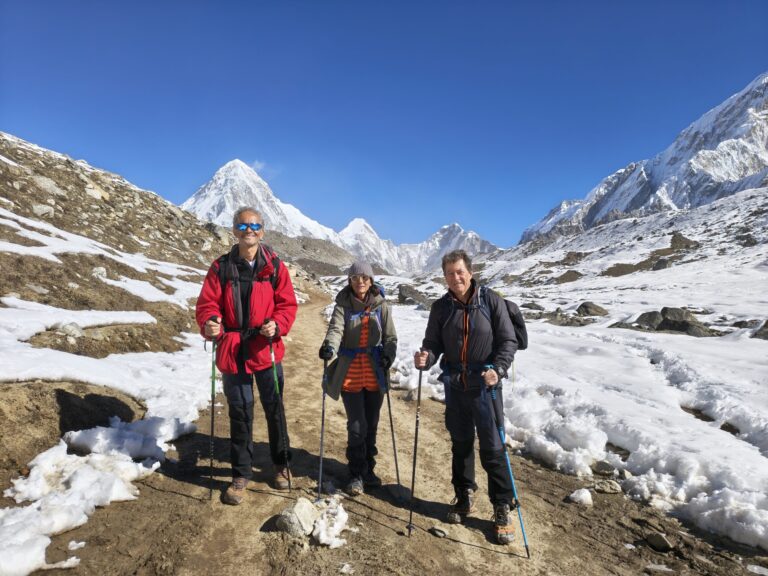
Interested people can enjoy the Everest Base Camp during the wintertime from December to February. Most days are crystal clear with blue skies, great views, and exciting walks despite the cold mornings. The late afternoon gets a wind-chill factor with freezing night temperatures, but with a clear, bright, and starry night sky.
Why Timing Matters for the Everest Base Camp Trek
The timing of your Everest Base Camp trek directly affects weather, visibility, safety, flight reliability, and overall experience—choosing the right season can mean clear Himalayan views and smooth logistics, while the wrong timing can lead to delays, poor visibility, and difficult trail conditions.
When you trek to Everest Base Camp, you’re not just picking dates—you’re deciding how the entire journey unfolds, from flights to daily walking conditions.
Weather Conditions in the Khumbu region
The weather in the Everest region is unpredictable and changes quickly, especially as you gain altitude.
- Rapid weather changes: Mornings often start clear, but clouds and wind can build by afternoon. Sudden snow or rain isn’t unusual, even in peak seasons.
- Temperature drops with altitude: For every 1,000 meters you climb, temperatures drop significantly. Places like Dingboche and Gorak Shep can fall well below freezing at night, even in spring.
In simple terms, what feels comfortable in Lukla can turn harsh within a couple of trekking days.
How Seasons Affect Your Trek Experience
Timing isn’t just about weather—it shapes what you actually see and deal with on the trail.
- Visibility of Mount Everest:
Autumn (especially October) offers the clearest skies, while late spring can be slightly hazy. During the monsoon, clouds often block mountain views entirely. - Trail conditions:
- Spring & autumn: dry, stable trails (best walking conditions)
- Winter: icy sections, especially early mornings
- Monsoon: muddy paths, slippery rocks, and occasional landslides
- Flight reliability at Lukla Airport:
Lukla flights depend heavily on the weather. Clear seasons (spring/autumn) have more reliable schedules, while monsoon and winter often bring delays or cancellations. It’s common for trekkers to wait hours—or even days—when conditions aren’t favorable.
What this really means: The right timing gives you clear mountain views, safer trails, and smoother travel days. The wrong timing can turn the same trek into a slow, uncertain experience with limited visibility and frequent delays.
Spring and autumn are the best seasons for the Everest Base Camp:
Travelers might wonder why spring and autumn are the best seasons for the Everest Base Camp. As well as for other various adventures around the Himalayas, the reason is that Nepal has four main seasons.
The spring starts in March and lasts till May; summer and monsoon are from June to August, and autumn/fall is from September to November.
Winter begins in December to February, the coldest months to venture into.
Everest Base Camp Trekking. The Nepal Himalayas get more worldwide visitors for various adventures during the spring and autumn seasons.
Including the Everest Base Camp Trekking when the days are fine, with sunny days for exciting treks and views.
During the spring and autumn, the Everest Base Camp gets a mass flow of trekkers, one of the high and busy seasons. Trekkers will encounter more people en route to Everest Base Camp, where the trail can get crowded with trekkers. As well as with pack animals like yaks and Zhopkyo (mixed breeds of yaks with cows or oxen).
Including the trekking guides, staff, and porters from various trekking companies and groups of mountaineers. Most of the lodges at designated overnight stops can get crowded with trekkers. The local trekking companies need to book the lodge accommodations well in advance before it is overbooked.
Spring The High And Peak Season For Trekking And Mountaineering:
Autumn: The High Season For Trekking And Peak Climbing
Autumn (September to November) is one of the busiest and most rewarding seasons in the Himalayas, especially for the Everest Base Camp trek. Although daylight hours are slightly shorter than in spring, the conditions are highly favorable, with stable weather, dry trails, and consistently clear skies. Most days offer excellent visibility, making it one of the best times to enjoy unobstructed views of Mount Everest and surrounding peaks across the Khumbu region.
This season is particularly enjoyable for trekkers who value scenery and social atmosphere, as the trails leading to Everest Base Camp are lively, with trekkers from around the world. Beyond trekking, autumn is also considered the best time for climbing trekking peaks, thanks to its predictable weather patterns and minimal precipitation.
However, the popularity of this season comes with logistical challenges. Tea houses and lodges, especially in higher-altitude stops like Gorak Shep—the last settlement before Everest Base Camp—often reach full capacity. Similar to spring, advance booking becomes essential. Local trekking agencies typically secure accommodations ahead of time, and flights between Kathmandu and Lukla Airport need to be reserved early due to high demand. Planning ahead during autumn ensures a smoother and more comfortable trekking experience despite the crowds.
The Winter Low Season For Trekking To Everest Base Camp:
The winter months of December to February are the low seasons of trekking to Everest Base Camp. For the trekkers interested in enjoying treks and being away from the main flow of travelers. Winter time will be perfect, with a smaller number of trekkers to encounter during this low season of winter months. Most days are fine, with clear weather for views and walks, but much colder mornings, late afternoons, and nights. But, exciting and enjoyable to walk on a serene path, coming across fewer groups of trekkers. The Tea Houses and lodge will be nearly half empty, and with enough rooms to enjoy the comforts.
Month-by-Month Everest Base Camp Trek Guide (Weather + Crowd + Cost)
The best trekking windows for Everest Base Camp are April and October, when weather stability, clear mountain visibility, manageable crowds, and reliable logistics come together for the most balanced trekking experience.
Understanding the month-by-month pattern in the Khumbu region is important because conditions change sharply with altitude, temperature, and seasonal weather shifts, directly affecting trail safety, accommodation availability, and visibility of Mount Everest.
January – Coldest but Quiet
Very cold conditions dominate the higher sections of the trek, with temperatures often dropping below -15°C at night. Trails are extremely quiet, offering solitude, but many lodges operate with limited services. Costs are lower, but snow can block higher passes, and trekking requires strong cold-weather preparation.
February – Slightly Better, Still Peaceful
Cold conditions continue but begin to ease slightly toward the end of the month. Trekking routes remain uncrowded, making it suitable for experienced trekkers seeking quiet trails. Accommodation is widely available, and costs remain low, though snow patches are still common at higher elevations.
March – Start of Peak Season
Spring conditions begin to develop with gradually warmer temperatures and improving trail conditions. Rhododendron forests start blooming, adding color to the lower sections of the route. Crowds begin increasing mid to late March, and prices for flights and lodges start rising.
April – Best Balance Month
One of the most stable and recommended months for trekking to Everest Base Camp. The weather is steady, the skies are clear, and the visibility of the peaks is excellent. Crowds are high but well distributed along the route, and services operate at full capacity.
May – Warmer but Hazy
Temperatures rise, especially in lower altitudes, but visibility starts becoming slightly hazy due to pre-monsoon conditions. Early May still offers good trekking conditions, while late May can feel warmer with reduced clarity of mountain views.
June – Start of Monsoon
Monsoon conditions begin with rainfall affecting the lower trekking sections. Trails become slippery and less stable, and flights to Lukla Airport often face delays. Crowds reduce significantly, and costs drop.
July – Heavy Rain & Low Visibility
Peak monsoon month with continuous rainfall, muddy trails, and frequent flight disruptions. Landslide risks increase in lower regions. Visibility of Mount Everest is very limited, making trekking challenging and less recommended.
August – Wettest Month
Conditions remain difficult with persistent rain, wet trails, and leech activity in forested areas. Flight reliability remains low, and trekking traffic is minimal. Only highly experienced trekkers attempt the route during this period.
September – Transition Period
Monsoon starts to withdraw, especially in late September. Trails gradually improve, and visibility begins returning. Crowds slowly increase again, and trekking conditions become more stable toward the end of the month.
October – Best Overall Month
Considered the peak trekking month with stable weather, crystal-clear skies, and excellent visibility across the Khumbu region. Crowds are high, and costs are at peak season levels, but overall trekking conditions are the most reliable of the year.
November – Clear but Cooling
Early November still offers excellent visibility, but temperatures drop steadily toward winter. Crowds are reduced compared to October, making trails slightly less busy while still maintaining good trekking conditions.
December – Quiet & Cold
Winter conditions return with colder temperatures and fewer trekkers on the route. Costs decrease, and trails are peaceful, but higher sections can experience snow and freezing conditions, requiring proper winter gear.
Key insight: The most dependable months for trekking to Everest Base Camp remain April and October, offering the best combination of weather stability, visibility, and overall trekking safety.