
Me and a friend found Ram online to guide us on our EBC trek. The hiking was epic even in the winter and Ram was a great guide along the way. He let us dictate the pace and made sure we would make it to the destination on time & without trouble. He taught us some Nepalese & card games, and has a genuinely nice personality. I’d definitely recommend Himalayan Friendly to anyone.
Mickey S
Everest Base Camp Trek 12 Days
The Everest Base Camp Trek 12 Days has become one of the world’s most iconic mountain treks, which offers trekkers direct access to the summit of the Earth’s tallest mountain, Mount Everest.
Read our 30 reviews on Tripadvisor (opens in a new tab)- Duration
- 12 Days
- Difficulty
- Moderate
- Max. altitude
- 5545m
- Best season
- Sep-Dec, Mar-May
- Region
- Everest
- Activity
- Trekking
Overview
Everest Base Camp Trek 12 Days Highlights
- Stand in awe of Mt. Everest. Feel the scale and power of the world’s tallest peak as you gaze up at its snow-covered summit.
- Experience Sagarmatha National Park, a UNESCO World Heritage Site. Enjoy the challenging paths through stunning mountain scenery, wildlife, and views of the entire Himalayan region.
- Travel through the forests and into high mountain ranges, from evergreen trees to the open wilderness of the high Himalayas.
- Visit colorful villages that represent the Sherpa way of life. These hospitable villages are an unforgettable part of the Sherpa’s experience.
- Reach Base Camp and Kala Patthar. Stand under the massive south face of Mt. EveRouterest, then hike to Kz. Patthar to watch the sunrise. This is an experience you will never forget.
Everest Base Camp Trek 12 Days Overview
Thousands of trekkers have started their treks into the Khumbu region of Nepal each year by flying to Lukla, Nepal, and trekking through valleys, rivers, and ridges to reach their final destination at the Everest Base Camp (5,364 meters). The trek itself provides visitors to the region an opportunity to experience breathtaking mountain scenery, to immerse themselves in Nepalese culture, and to have a challenge.
The 12‑day itinerary stands out because it is short enough to fit into most travel plans yet long enough to include key stops, acclimatization rest days, and the unforgettable sunrise viewpoint at Kala Patthar (5,545 m), often described as the best place to see Everest’s summit.
If you’re ready to take on this epic journey, we, Himalayan Friendly, a trusted local trekking company, can organize your 12-day Everest Base Camp trek with expert guides, experienced porters, and fully confirmed departures. Experience Everest safely and comfortably with professionals who know the mountains best.
Best Route Everest Base Camp Trek for 12 Days
The Everest Base Camp trek, 12 days, is a well-paced journey through the Himalayan mountains with a combination of mountain scenery, Sherpa culture, and high-altitude adventure. Most trekkers fly in from Kathmandu to Lukla, which is the gateway to the Khumbu region of Nepal, where most of the trekkers start their journey. The trekking route then takes trekkers through Sherpa villages with their many colorful prayer flags and spinning prayer wheels, as well as small stupas that give a real insight into everyday life for the local Sherpa people.
The journey will eventually lead you into the Sagarmatha National Park UNESCO World Heritage Site. Walking amongst giant rhododendron trees, tall pines, fir trees, and oak trees. You will climb up to Namche Bazaar, the bustling hub of Sherpa culture. Namche Bazaar is the ideal place to relax, acclimatize, and take small hikes to view panoramic views of Mount Everest and other peaks.
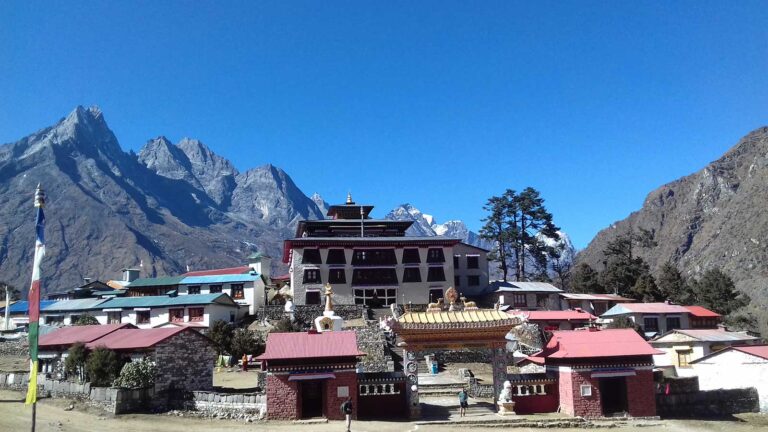
From Namche, the trail continues to Tengboche Monastery, perched on a ridge with wide Himalayan views. Beyond Tengboche, the green tree lines fade, and the trek moves into high-altitude wilderness, passing through Dingboche and the Imja Valley ideal spots for rest and further acclimatization.
The next day, the trek to reach Lobuche, then Gorak Shep, the last stop prior to Everest Base Camp. Once at Base Camp, you are standing underneath Mount Everest, Lhotse, Nuptse, and the Khumbu Icefall. This is the view that defines the trek. The highlight of the journey will be reaching Kala Patthar, an isolated rocky ridge that allows you to see the sunrise over Everest and the surrounding peaks.
The return journey follows the same trail back to Namche Bazaar and Lukla. Trekking with an experienced guide from Himalayan Friendly ensures a smooth, safe, and organized trip, letting you focus on the mountains and culture.
Why Trek Everest Base Camp for 12 days with Himalayan Friendly?
Led by locals, guided by experience. Founded by Ram Kumar Ghale, a licensed Nepali trekking guide with over 8 years of experience, Himalayan Friendly is run by a dedicated local team who know the Khumbu inside out.
Clear preparation from day one. You will have all the necessary information regarding the route, acclimatization, daily distances, and altitude awareness so that you know what to expect on the trail.
Support you can rely on. Our team is available via WhatsApp and email before and during the trek, ensuring smooth communication from planning to Base Camp.
Seamless logistics. Arrival and departure transfers between the airport and your hotel in Kathmandu are included to make arrival/departure easier for guests.
Essential gear included. We provide warm down jackets and sleeping bags suitable for all seasons. Book a porter and receive a waterproof duffel bag to keep. Additional gear can be arranged if needed.
Safety first, always. From proper pacing to key stops like Namche, Dingboche, Everest Base Camp, and Kala Patthar, every detail is handled to deliver a safe, well-organized, and memorable trek.
Best Time to Trek Everest Base Camp in Nepal
There are two peak seasons when trekking to the Everest Base Camp (EBC) is possible, Spring (March-May) and autumn (September-November). Spring is deemed the best time since it enjoys warmer hiking conditions and reduced risk of cloudy weather.
Why Spring Is Ideal
It is no wonder that spring, between March and May, is a celebrated season:
- Clear skies and mild temperatures make hiking comfortable.
- Rhododendrons and wildflowers bloom, adding color to the trail.
- Villages are vibrant, which makes you experience the Sherpa culture of the Everest region.
Why Autumn Works Best
Autumn, from September to November, comes after the monsoon:
- The air is cold and clear and has a breathtaking view of Everest, Lhotse and Ama Dablam.
- Trails are dry and safe, perfect for moderate difficulty Everest trekking.
- The higher the altitude, the colder it is at night, yet the sunrise sceneries at Kala Patthar are worth it.
Other Seasons
- Monsoon (June- August): Pours cause trails to become slippery, streams to rise, and mountain views to be obstructed frequently. Not suitable for first-timers.
- Winter (December -February): Trails are snow-white, lodging is scarce, and the temperatures are very low, but the area is empty and uncontested.
Summary: Spring and Autumn are the best and safest seasons in the Everest Base Camp trek 12 days. You will have good scenery, easy hiking, and the complete Himalayan experience.
Itinerary
-
Day 1
Fly to Lukla 2,860 m and trek to Phakding 2,610 m-04 hrs.
Morning gets transferred to Kathmandu domestic airport for a scenic short flight to Lukla. During air-borne, enjoy stunning views of the Himalayan peaks with Everest, Lhotse, and Makalu. After half an hour or a little more, then the small aircraft land at Lukla’s Tenzing & Hillary Airport. Having time for a refreshing stop and to get organized for the first-day trek to Phakding. Start the walk through the town of Lukla then down and up past nice villages to Phakding for an overnight halt.
-
Day 2
Trek to Namche Bazaar 3,440 m-06 hrs.
From Phakding the morning walk leads on the pleasant trail with a short down and up to reach Monjo Village. Then a short walk to the entrance of Sagarmatha National Park, which is listed as the World Heritage Site. The Sagarmatha is a name for Everest in Nepal, and the native is known as Chomolungma. From the park a short descent to cross a bridge above Dudh Koshi River. Then reaching Jorsalle, a small village for lunch stop. Afternoon walk leads to dense forest of rhododendrons, and pine trees, a short climb to a ridge. The walk leads to cross a high bridge, as the climb starts on a winding uphill path to Namche Bazaar.
-
Day 3
Rest day in Namche Bazaar for acclimatization with short hike.
Enjoy an extra day at Namche Bazaar, the hub of Khumbu villagers.
In Namche, a weekly Saturday market is held, hence the name Namche Bazaar, a great place for a rest day. Enjoy a short hike to support acclimatization before the high-altitude walks to Everest Base Camp. The best hike is to the top of Namche Bazaar, for a superb panorama of Everest, Lhotse, and beautiful Ama Dablam with an array of peaks. As will visit the interesting museum, which treasures information about the Khumbu region, the local culture, and of flora, fauna with mountaineering history. The other best hike is to Everest View Hotel of few hour’s climb above Namche Bazaar. The first luxury hotels around Khumbu and Everest areas are listed in the Guinness World Record as the highest hotels.
From the hotel enjoy the great views of Mt. Everest and Ama Dablam, then walk down to Namche Bazaar. Rest of the afternoon explore Namche Bazaar lined with shops, stores and fancy restaurants, café, bakeries. -
Day 4
Trek to Tengboche Monastery 3,867m-05 hrs.
After a pleasant rest day at Namche Bazaar, the adventure continues the walk follows the scenic trail. Facing views of Everest with arrays of snow-capped peaks, as the walk leads downhill to Phunki Tenga. A small place and a popular lunch stop for trekkers en route to Tengboche and beyond. After lunch climb for a few hours to reach Tengboche and the Monastery, then check into a nice lodge. At Tengboche tour of the monastery of cultural and religious interest with beautiful paintings. Tengboche is located on a picturesque spot, enclosed by a series of snowy mountain ranges with views of Mt. Everest.
-
Day 5
Trek to Dingboche 4,410 m -05 hrs.
Breakfast with a panorama of the majestic Himalayan Mountains with views of Mt. Everest. The morning starts heading downhill into serene woods, after getting across the bridge, leaving the tree line behind. Heading towards sheer mountain wilderness, then gradually up to Pangboche, the last permanent village and human settlement. After Pangboche a short climb to Somare for lunch, with grand close views of Ama Dablam. Afternoon walk to exposed areas, then down to a stream, crossing a small bridge. The climb leads to winding up to reach scenic Imjatse Valley, where Dingboche is situated. Beneath the towering north face of Ama Dablam with views of Island Peak, towards the east of the valley. At Dingboche enjoy the comfort of a nice lodge accommodation, and marvel at the beautiful surrounding scenery.
-
Day 6
At Dingboche rest day for acclimatization and short hike.
Enjoy another rest day at Dingboche for acclimatization and take a short hike to the scenic ridge top of Nakarjung. From this high point fabulous views of the surrounding snow peaks with a close look of Ama Dablam and Island Peak. Includes views of the world’s 5th highest Mt. Makalu in the east direction, after a great scenic hike, back to Dingboche. Afternoon, at leisure and explore Dingboche’s nice settlements with shops, lodges, and restaurants.
-
Day 7
Trek to Lobuche 4,928 m -05 hrs.
From Dingboche, adventure heads slowly lead towards our destination, the morning walk heads to a short steep climb. On reaching above Imjatse Valley and Dingboche, then enjoy climbing on a gradual uphill with a more winding gentle path. Then towards the small place of Thugla, located on the mid-way Between and Pheriche routes towards Everest base camp. Stopping in Thugla for lunch, the afternoon leads to a steep climb of less than an hour. To reach atop Thugla ridge, and then with gradual walk up to Lobuche for overnight top.
-
Day 8
Trek to Everest base camp 5,364 m via Gorakshep 5,180 m-06 hrs.
Morning rising as early as possible, as well as carrying packed lunch for the long day hike to Everest Base Camp. The trail follows on level path with a climb above Khumbu Glacier. The walk continues towards Gorakshep, with a short descent and entering the mountainous areas en route to Everest base camp.
Gorakshep is located on a wide glacial field beneath the towering Mt. Pumori and Kalapathar black rocky hill. After a short rest, the walk continues heading towards. Everest Base Camp. The walk continues on a gradual winding path across a moraine of rocks and glaciers, then reaching Everest Base Camp.
Enjoy the dramatic arctic zone landscapes, beneath the mighty Mt. Everest amidst, remorseless fields of ice, snow, rocks, and glaciers. Standing close to the massive Khumbu Ice Fall, after an exciting moment at Everest Base Camp, return walk to Gorakshep for an overnight halt.
-
Day 9
Climb Kalapathar 5,630 m and trek to Pheriche 4,371 m-06 hrs.
An early morning last big climb of the adventure, the hike to the top of Kalapathar high ridge. A famous and most popular for the grand views of Mt. Everest with surrounding towering giant mountains. The steep climb lasts for a few hours, from the highest point of the trek. Enjoy the great close views of Mt. Everest, at a mere distance with Pumori towards the north in front of Kalapathar top. After the memorable experience amidst the world’s highest peaks, descend to Gorakshep for breakfast. On completing the major highlights of the adventures downhill on the same route till Thugla past Lobuche. From Thugla, the trail leads down to the Pheriche Valley, a pleasant walk to Pheriche for lunch and an overnight stop. Pheriche is a lovely settlement with many good lodges with close views of Ama Dablam, Taboche, and Cholatse Peaks.
-
Day 10
Trek to Namche Bazaar via Tengboche-07 hrs.
The morning walk heads downhill to the bridge, and then uphill to a small ridge with a long descent to Pangboche. After a short refreshing rest, walk further down to a bridge, then climb to Tengboche Monastery. As the walk reaches you back into green vegetation and tree lines, enjoy the stunning views from Tengboche. After Tengboche down to Imjatse River at Phunki Tenga, with a short steep up to Shanasha village. From this small settlement walk on a pleasant winding trail to Namche Bazaar for an overnight stop.
-
Day 11
Trek to Lukla and transfer to a lodge-07 hrs.
The last and long day trek to Lukla, enjoy the final walk of the adventure on leaving Namche Bazaar. Morning walk with a long descent to Dudh Koshi River Valley, then the walk gets pleasant, on a gradual path to Jorsalle. After crossing a bridge with a short steep climb to the national park then reaches Monjo Village. After Mojo the trail follows to cross a long bridge, towards Phakding for lunch, afternoon an enjoyable walk. Following the winding gentle path with the last final climb of an hour to reach Lukla, by late afternoon. Enjoy the last overnight at Lukla and around Khumbu, Everest region.
-
Day 12
Fly to Kathmandu and transfer to hotel.
Morning is time for the flight to Kathmandu and walk to Lukla’s Tenzing & Hillary Airport. After checking in get on abroad in a small aircraft for a short scenic flight to Kathmandu. On reaching Kathmandu airport, a short drive takes you to your hotels, the rest of the day at leisure for individual activities.
What’s Included
Cost includes
- Pickup and drop off from your Hotel
- Flight transportation from Kathmandu to Lukla/Lukla to Kathmandu. (Note:- During the peak seasons for the Everest Base Camp Trek (March to May and September to November), all the Lukla flights will be operated from the Manthali Airport due to congestion at Kathmandu Airport.) .
- Three times daily meals with tea/coffee (breakfast, lunch, and dinner) during the trek
- Snacks of seasonal fruits during the trek
- All communication during the trek
- Fully licensed, English speaking trekking guide
- Porter to carry your gear (1 porter for every 2 clients)
- Sagarmatha National Park entry permit fee
- Khumbu Pashang Lhamu Rural Municipality fees
- All government, local taxes, and official Expenses
- Down jacket and sleeping bag use while trekking
- Duffle bag for trekking
- Trekking map
Cost excludes
- Accommodation in Kathmandu
- Personal expense (shopping, snacks and cold drinks, hot shower, alcohol, Wi-Fi, telephone call, battery re-charge fee), extra porters, etc
- Meals not specified in the 'Meal Inclusions' in the above itinerary
- Travel insurance that covers emergency high-altitude rescue and evacuation (compulsory)
- International flight airfare
- All the costs and expenses which are not listed in "What is included?"
Useful Info
Food on Everest Base Camp Trek
Glorious food is the most important en route trekking to Everest base camp or other adventures. To keep you fit and able to enjoy the trekking, all lodges provide comprehensive food menus of great variation. Including breakfast, lunch, and dinner, as well as light snacks, refreshing drinks, and bakery products in some lodge restaurants.
Trekkers once enter the well-kept dining hall, will be surprised to find various choices of foods, snacks, and drinks. The breakfast menu is either a set or la carte and includes eggs of choices from boiled, scrambled, poached, or omelet. Served with a loaf, pancakes, bread toasted, or as it. is with hash brown potatoes, grilled tomato. As well as cereal like oat porridge, corn flakes, and granules or muesli to enjoy with warm milk. Followed by black or milk tea, coffee milk/black and hot chocolate, Horlicks or Bournvita the energy drinks.
Lunch is light en route trekking, can be anywhere around the best small lodge restaurants or Tea-House. Mostly trekkers enjoy as time permits how hungry one is. The lunch is either fried noodles with vegetables or fried rice, fried potato and eggs, or noodle soups. Including Tibetan bread which is quite popular along the trekking route, or simply boiled potatoes. Fresh fruits are scarce, due to their availability and season-wise, but one can have canned mixed fruits.
Dinner to enjoy, from tomato, onion, and chicken light soups followed with papadom (a crispy dry thin Indian cracker) or popcorn. The main course, from fried or boiled noodles, spaghetti, Nepal’s famous Dal Bhat, and fried rice. Dinner can be set or La Carte’: In large groups of more than 4-6 is best to have set meals, this will save fuel and time.
Accommodation on Everest Base Camp Trek
Trekkers and visitors will be amazed by the lodge’s accommodations around the Khumbu region of Everest. Trekkers have the options for various standards of lodge accommodation for overnight stops, en route to Everest Base Camp.
From Lukla onwards to Dingboche trekkers can choose from budget, standard, or luxury lodge accommodation. From Namche Bazaar to Tengboche and a few places in Dingboche, most lodges provide common bathrooms and toilets. In most places, the rooms are on a shared basis with common bathrooms and toilets. Due to harsh weather and terrain conditions. The plumbing systems for running water freeze in the morning, evening, and nighttime. Due to freezing temperatures from Namche Bazaar onward, using hot showers will be at an extra cost. Especially sharing common bathrooms and toilets.
All lodges have electricity to light the large dining room powered by local hydro or solar power.
Everest Base Camp Trek 12 Days Cost With Himalayan Friendly for 2026/27
A well-run 12-day Everest Base Camp trek starts from US $1,230 per person—and this is the price that actually gets you a safe, smooth, and memorable experience. Anything cheaper often cuts corners on guides, porters, or permits, which is risky at high altitude.
With Himalayan Friendly, the cost adjusts by group size, giving better value without compromising on safety or support.
Private Group Prices (Per Person)
- 1 Person: US $1,460
- 2 Persons: US $1,230
- 3–4 Persons: US $1,200
- 5–7 Persons: US $1,150
- 8–10 Persons: US $1,080
What’s Included
When you trek with Himalayan Friendly, your cost covers everything you need for a stress-free journey:
- All necessary permits (Sagarmatha National Park + Khumbu Rural Municipality)
- Licensed, local professional guide
- Porter support so you can trek light
- Teahouse accommodation along the trail
- Most meals during the trek
- All trekking-region logistics, including transport from Kathmandu
No hidden fees, no last-minute surprises—everything is arranged for you.
Why It’s Worth It
Paying the right price guarantees proper acclimatization, experienced guides, and smooth logistics, so you can focus on the mountains—not paperwork or trail problems.
Book Your Everest Adventure Today
Himalayan Friendly takes care of all the planning, permits, and support. Lock in your 12-day Everest Base Camp trek now and enjoy a safe, organized, and unforgettable trek with the world’s highest peaks at your feet.
Frequently Asked Questions
Is 12 days enough for the Everest Base Camp trek?
Yes. Provided your itinerary has been planned for adequate time to acclimatize in locations such as Namche Bazaar and Dingboche, a 12-day period is sufficient to travel at a safe pace to get to Everest Base Camp and Kala Patthar.
Do I need a guide, or can I trek solo to Everest Base Camp?
According to the newest regulations, it is required that trekkers have a licensed trekking guide to go to Everest Base Camp. Having a guide not only fulfills regulations and adds an additional layer of safety, but it also takes care of logistical issues on the trail, helps with altitude sickness, and adds a level of enjoyment to your trip through their knowledge of the region.
Has Anyone Lost Their On Everest Base Camp Trek?
Very rarely and few trekkers have lost their lives in the past decades, trekking on their own without a guide. At present the situation has changed no trekkers are allowed to trek on their own, for safety purposes. Trekkers do catch HAS (High Altitude Sickness) but fade soon after getting acclimatized with rest days.
Very sick people are airlifted on a helicopter to the hospital in Kathmandu Since the Government made rules for foreign trekkers to be accompanied by local guides. From then no incident of death has been recorded so far since the trekkers have to trek with a guide.
What is the best season for the Everest Base Camp trek?
The two best seasons are in the spring (March – May) and the autumn (September – November). These two seasons have a lot of stability in terms of weather and have nice, clear views of the mountains, as well as decent weather conditions for trekking.
What permits are required for the Everest Base Camp trek?
You will need to have the following permits:
Sagarmatha National Park Permit
Khumbu Pasang Lhamu Rural Municipality Permit
When you trek with Himalayan Friendly, we will arrange for all of your necessary permits, allowing you to focus entirely on completing the trek.
What Our Trekkers Say
- Reviews on Tripadvisor Based on at least 30 travellers (opens in a new tab)
- Reviews on Google Based on at least 10 travellers (opens in a new tab)
Keep exploring
More Treks in the Everest Region
 Popular
 4% off