Everest Base Camp Trek in December
Everest Base Camp Trek in December is the starting season of the winter months around Nepal and all Himalayan regions. Despite the cold time of December, trekkers will experience more adventures than in high season. The reason is that the mass flow of trekkers and mountaineers will be much less in December. This makes the winter walk quite special compared to spring and autumn high seasons, as you avoid large groups of trekkers.
Everest Base Camp trekking in December is a great and exciting way to enjoy the Christmas and New Year holidays. Most people might not be aware that treks to Everest Base Camp and other moderate adventures around the Himalayas are possible. Although it is a cold month, most days are bright with crystal blue skies for views and pleasant walks.
December is also the best time to catch a glimpse of some mountain wildlife. All the wild animals come to graze around the lower areas to escape the harsh winter cold. December has a few good advantages over joining the main peak seasons. There will be fewer crowds of trekkers; most settlements with only a few lodges are available for the trekkers.
The lodges and inns will be almost empty so that you can enjoy the best of the best. Enjoying the nice warm comfort of a lodge with a great variety of meals. The services in the lodges will be much faster than in the busy seasons of spring and autumn/fall times.
The best thing about the Everest Base Camp Trek in December is enjoying pleasant walks with fewer trekkers. The views of the towering snow-mountain ranges are visible on most of the days throughout the walks. Great chances of flying in and out of Lukla on time as per the itinerary days.
During high times, all domestic flights to Lukla will be overbooked and can get delayed or canceled. It is due to the unfavorable weather conditions that may hamper the trekking itinerary schedules sometimes.
The Weather for the Everest Base Camp Trek In December
Trekkers joining the trek to Everest Base Camp in December will enjoy the pleasant and exciting scenic walks. In the cold winter season, most of the villages seem deserted. As the highlanders, local villagers migrate to lower, warmer regions to escape the cold winter. But it will be a different scenario during December, with few trekkers to encounter on daily walks.
Most trekkers might think it will be cold to enjoy the walk on overcast days in December. But to their surprise, they will be amazed at bright sunny days, especially from the late morning till afternoon. Although most days are fine and the weather is full of sunshine, the daylight is short, and it gets dark soon.
The sun rises late at 6 a.m. and sets by 5:30 p.m. The nights are clear and bright with shining stars. In the mornings and in shaded areas away from sunlight, including the late afternoons till night, it is freezing.
Minimum temperatures of -5° to -10° Celsius as altitude-wise from above 2,800 m to 5,000 m. The maximum temperatures on a clear day from late morning till mid-afternoon are -15° to -20° Celsius.
Sometimes the sunshine can be very bright with strong UV rays during the day, especially with reflection from snow. As the walks reach higher away from vegetation and above the tree lines, it gets windy. Add much cold with an extra wind-chill factor, where trekkers need to be equipped with warmer clothing to fight against the cold. Nevertheless, as the walk progresses, one will feel warm with steady paces reaching the overnight destinations.
Route for the Everest Base Camp Trek In December
The trail from Lukla is gradual with downs and ups to reach the first overnight halt at Phakding Village. It is located in a Dudh Kosi glacial river gorge, in a shady place away from the bright sunlight. The next morning, as the sunlight strikes, enjoy the pleasant walks from one smaller village to another.
Cross bridges with a slower climb to Chumo and lovely Monjo Villages, then enter the Sagarmatha National Park. Located in the shade within a gorge, the route follows a bridge to the last village of Jorsalle. The walk leads to the riverbank amidst a lovely shade of tall rhododendrons, oaks, hemlocks, and fir with pine trees.
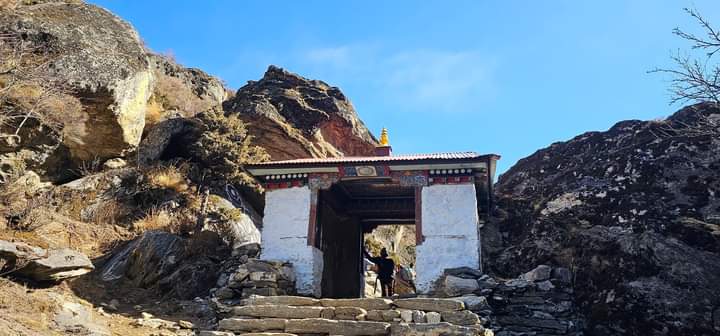
Get cooler as you cross the last suspension bridges with a slow climb on a winding trail to Namche Bazaar. The major hub of Khumbu villagers is the only place in the high Khumbu where a colorful and busy Saturday market is held. Namche Bazaar is also an ideal place for rest days with a perfect altitude for acclimatization at 3,440 meters high. From Namche Bazaar, the sunlight gets stronger as you reach higher heights to Tengboche. It is a beautiful spot with a colorful, majestic monastery surrounded by an array of snow peaks.
From Tengboche, leaving the forested areas for sheer mountain wilderness as the air gets thinner with cold winds. It is a great walk with fewer trekkers to come across on a serene, scenic trail to Dingboche, another lovely settlement. Dingboche, although it has bright sunshine hours, has cold mornings and so is the late afternoon till nighttime.
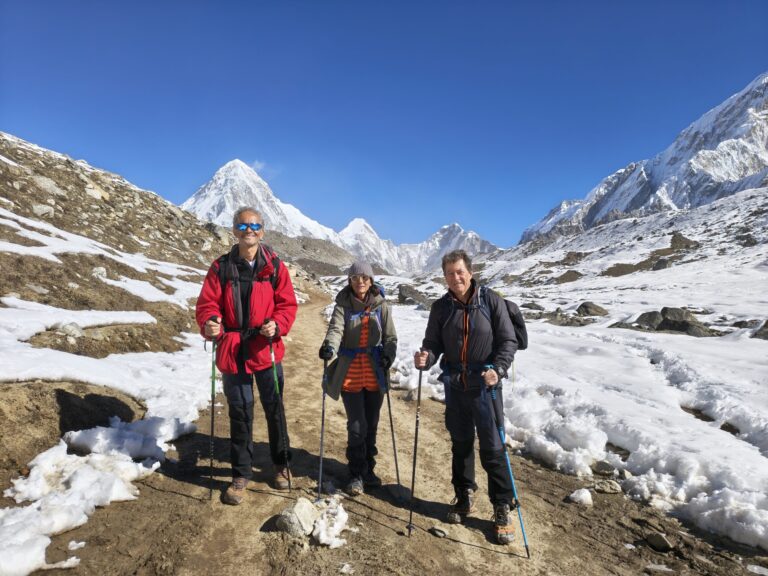
The adventure follows higher terrains, but the walk is pleasant, with short, steep climbs, and the glorious view to enjoy. Enjoy the lovely walks to Lobuche, one of the coldest places, situated in a corner away from the sunshine. Finally, the adventure reaches you at the foot of the world’s highest peak, Mt. Everest. The morning is pleasant and cooler as the trail follows above the massive Khumbu Glaciers with views of Mt. Pumori.
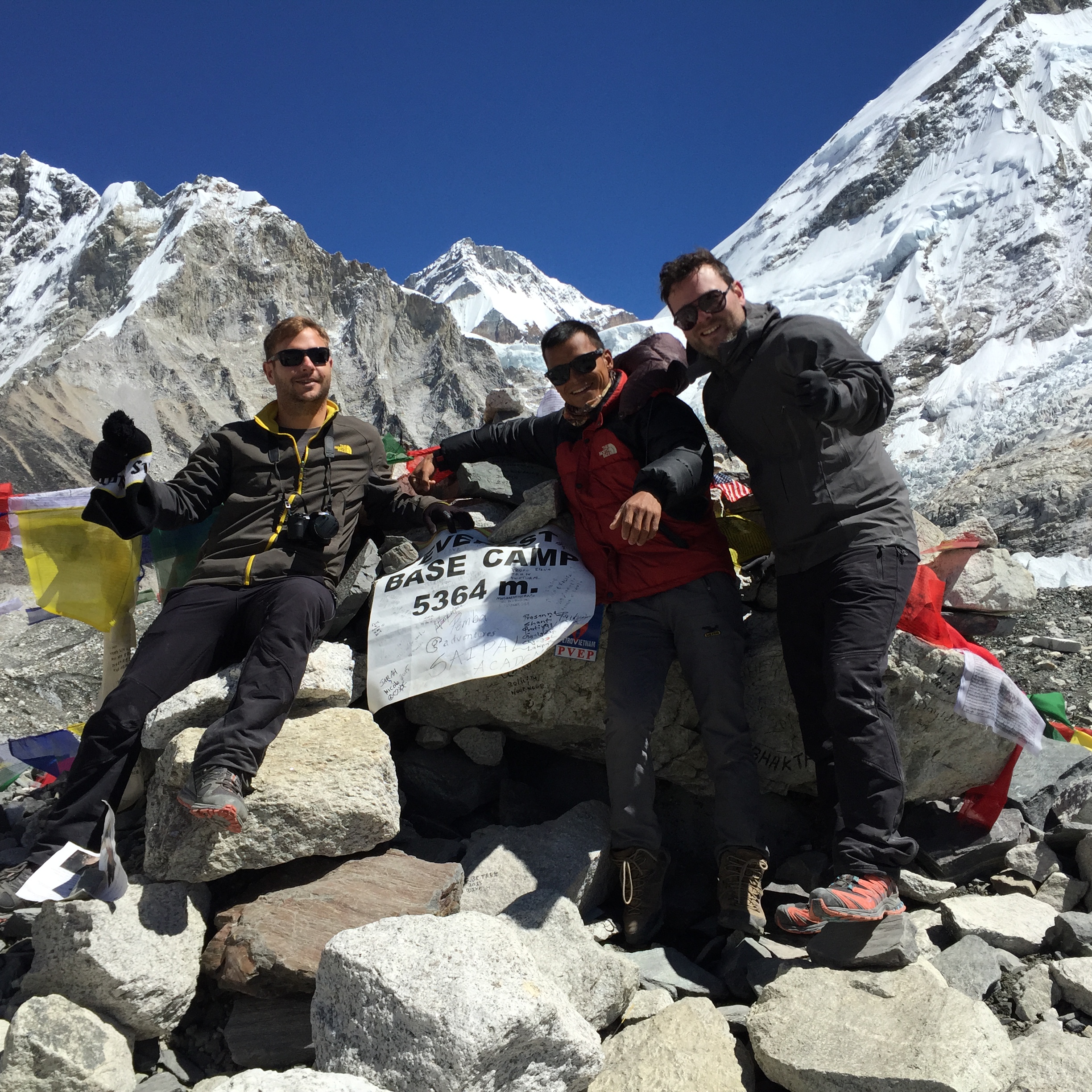
As well as Mt. Everest, reaching the last remote and isolated settlement of Gorakshep. From here, a few hours of steady walking to the foot of Mt. Everest at base camp. It is one of the highest spots at 5,364 m/17, 598 feet before the climb of Kalapathar high ridge. The daytime is full of sunshine for perfect views of the surrounding towering peaks, with great views of the Khumbu Icefall. The afternoon gets quite cold with wind chill as you reach Gorakshep for the overnight stop.
The next early morning climb of a few hours with a steep haul to Kalapathar at 5,643 m/18,514 ft. The most popular and famous, the highest viewpoints around the Khumbu region. The top of Kalapathar offers mind-blowing views of the giant peaks, including Mt. Everest, at a close distance. Morning weather is fine and pleasant, and it can get snowy sometimes, after Kalapathar and Gorak Shep on the trail to Lukla. In the wintertime of December, with fewer groups of other trekkers, the flight back to Kathmandu is much easier. To get the first flight to and from Kathmandu to Lukla with fewer passengers.
Conclusion:
Everest Base Camp Trekking in December will be the best for trekkers who want to avoid crowds of trekkers. It will be a great adventure holiday for those interested in celebrating Christmas and the New Year at the foot of Mt. Everest. Most people are unaware that visitors can enjoy moderate walks around the Himalayas in wintertime.
The winter month of December is not too harsh; it can get snowy sometimes. But most days are fine and crystal clear for the views and scenic walks. Enjoy the unparalleled vista of the Himalayan chain of peaks on flights both ways.
It is a different way to experience the serene walks to Everest Base Camp, amidst tranquil surroundings. One comes across fewer trekkers than in the peak times of spring and autumn seasons. During the December trek to Everest base camp can get overcast sometimes. But most days the weather remains perfect with a clear blue sky, despite the freezing mornings and nights.
FAQs: Everest Base Camp Trek in December
Is the Everest Base Camp Trek possible in December?
Yes, the Everest Base Camp Trek is possible in December, but it comes with winter challenges such as freezing temperatures, icy trails, and unpredictable weather conditions. Trekkers must be well-prepared with proper cold-weather gear, a flexible itinerary, and an experienced guide. While the route remains open, conditions can become harsh above 4,000 meters, making it suitable mainly for well-prepared and physically fit trekkers.
How cold is Everest Base Camp in December?
Everest Base Camp in December is extremely cold, especially at higher elevations like Gorak Shep and EBC itself. Night temperatures can drop to around -15°C to -25°C, while daytime remains cold but slightly manageable in sunlight. Wind chill makes it feel even colder, increasing the risk of hypothermia if proper layering is not used. Proper winter gear is essential for safety and comfort.
Are teahouses open in December on the EBC route?
Yes, most teahouses on the Everest Base Camp route remain open in December, especially in lower and mid-altitude villages like Lukla, Namche Bazaar, and Tengboche. However, as you move higher, some lodges may close due to extreme cold and low tourist flow. Facilities are more limited compared to peak seasons, so trekkers should expect basic accommodation and fewer services at higher elevations.
Is December a good time for the Everest Base Camp Trek?
December can be a good time for experienced trekkers who prefer solitude, clear mountain views, and fewer crowds on the trail. However, it is not ideal for beginners due to freezing temperatures, icy paths, and shorter daylight hours. While the scenery is stunning and peaceful, the physical and environmental challenges make it more suitable for well-prepared and winter-experienced trekkers.
Do flights to Lukla operate in December?
Yes, flights to Lukla do operate in December, but they are highly dependent on weather conditions. Fog, snow, and strong winds often cause delays or cancellations, especially in winter mornings. Trekkers should always keep buffer days in their itinerary to avoid schedule disruptions. Flexibility is important, as flight schedules can change quickly due to Himalayan weather patterns.
Is Everest Base Camp crowded in December?
No, Everest Base Camp is very quiet in December, making it one of the least crowded trekking periods of the year. Only a small number of experienced trekkers attempt the route during winter, resulting in peaceful trails and more availability in teahouses. This solitude is a major advantage for those seeking a calm and immersive Himalayan experience without peak-season crowds.